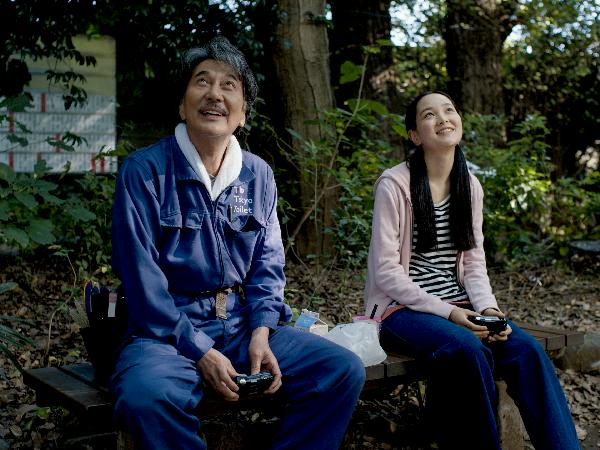
Perfect Days might just be the most striking dichotomy I’ve seen on film in a decade. It moved me in ways I didn’t see coming.
Hirayama wakes up every morning, gets a canned coffee from a vending machine, and hops into his car. The janitor drives between high-end public toilets in Japan, the background noise of classic rock tunes playing on his commutes.
He’s a man of simple pleasures — He works an average job, has an average life, and our protagonist shows few signs of yearning or aspiring to more. Soft-spoken and patient, he puts up with his young, flighty co-worker, and when his young niece unexpectedly shows up at his door, he takes it in stride.
Perfect Days is a portrait of a man any of us could know. He’s not special by film standards, but he does have an innate ability to find beauty in the mundane during his day.
There are pieces of this film that hint at a past Hirayama no longer identifies with — Chaotic, dramatic and full of sadness. One gets the lingering feeling his contentment with a quiet existence may be due to a life lived prior that was the opposite, but we never receive full confirmation.
A nominee for Best Foreign Language Picture Oscar this year, it’s clear the film has resonated with the Academy. But I think anyone with patience will find plenty to meditate on too. With a beautifully-curated collection of tunes, an absolutely incredible turn from Koji Yakusho, and patient direction from Wim Wenders that is content to let the viewer make their own assumptions, this is a movie that doesn’t spell it out for you.
It’s a deceptively simple plot — But the inflections on Yakusho’s face tell a lifetime of stories, and part of the joy of Perfect Days is dissecting what it means to you. I, for one, was entranced.
4.5/5 Stars
 Parker & The Picture Shows